Custom hardscapes
Stone steps for sloped yards
A safe way up the hill, from the driveway to the door or the deck to the yard. Every step set on its own base, with the same rise from bottom to top.
Why steps matter on a hill
Most lots on the North Olympic Peninsula climb somewhere: from the road up to the house, from the deck down to the yard, from the side yard to the back gate. Without steps, people cut a muddy line straight up the grass, and in a wet winter that line gets slick. A good run of steps turns a slope you avoid into one you use every day, with groceries in one hand.
What goes into a run of steps
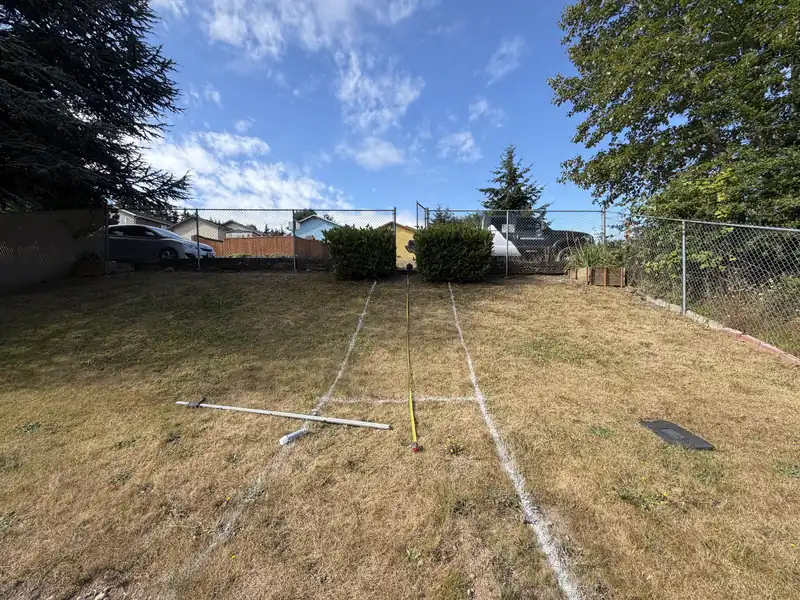
- Laying it out on the ground. We measure the total drop and the distance, then work out how many steps it takes so every rise is the same. One odd step in a run is the one people trip on.
- A base under each step. Each step sits on its own compacted base, dug into the hill, so it can't rock or slide as the ground goes from soaked to dry.
- Tying in the ends. The top has to meet a door, a deck, a gate or a path at the right height, and the bottom has to land somewhere solid, usually a paver landing or a crushed rock path.
- Water. Steps on a slope sit right where runoff wants to go. We pitch treads so water sheds off them, and we plan where it drains to before the first step goes in.
Cast stone, pavers or wall block
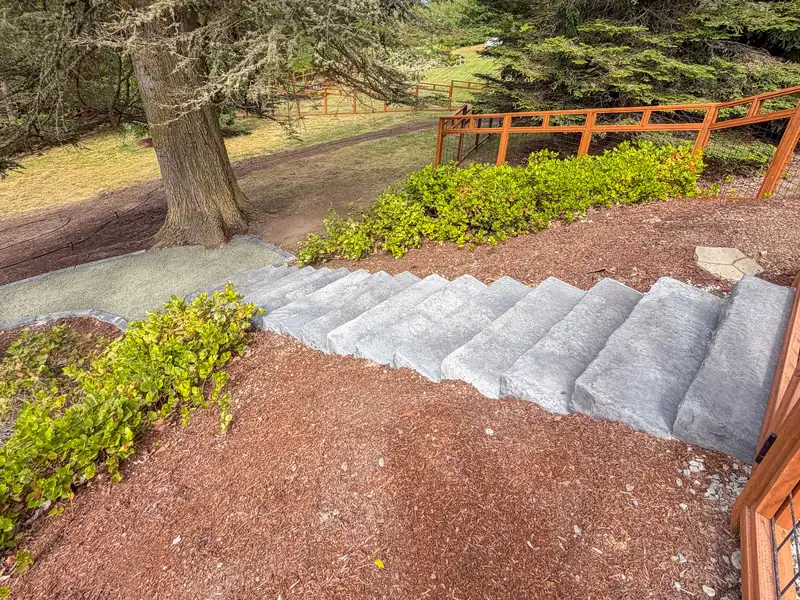
Cast stone steps are large, heavy pieces made to look like natural stone. Each one spans the whole tread, so there are no joints to shift, and they read well on a planted slope. They're what we reach for on most hillside runs.
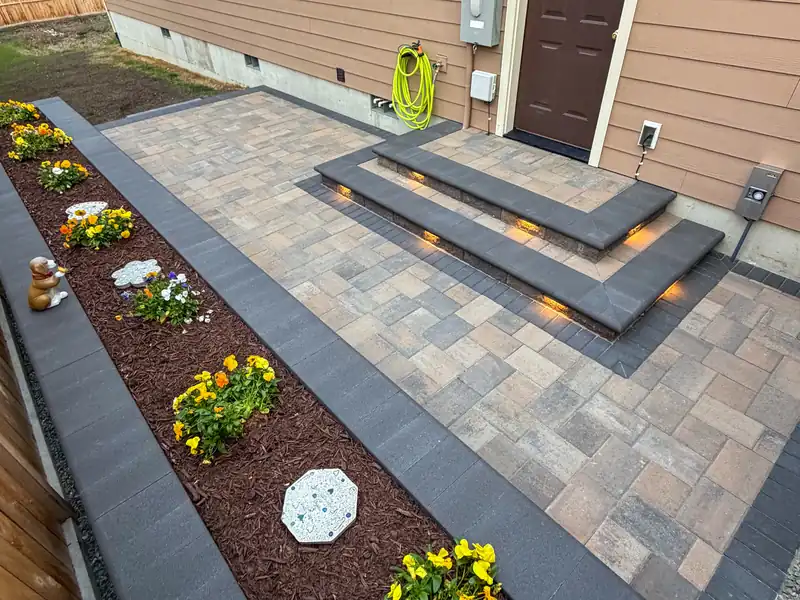
Paver and wall block steps are built up from smaller units, often with the same pavers as a patio and a dark cap on the edge. They make sense when the steps are part of a patio, like the two-tier steps down from a back door.
We'll show you both at the visit and talk through which suits the slope, the look of the house and the budget.
Soil and slopes around here
Sequim's glacial soils are dense in some spots and loose and rocky in others. Port Angeles lots tend to be wetter and steeper. Either way, a step that sits on topsoil will settle, so we dig past it and build each base on firm ground. On steep runs we sometimes need small retaining walls or boulders along the sides to hold the soil next to the steps, and we'll tell you at the visit if your slope needs them.
Three hillside step projects
Bell Hill, Sequim: wooden stairs replaced with cast stone
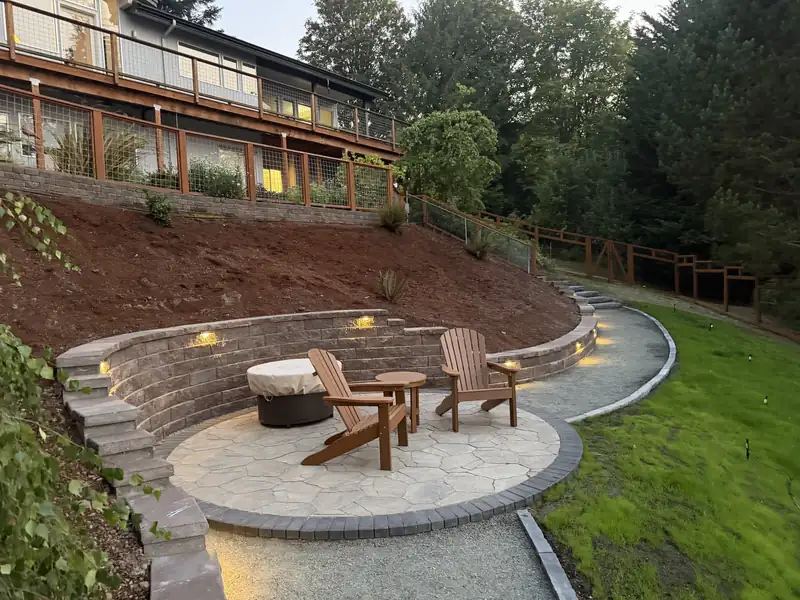
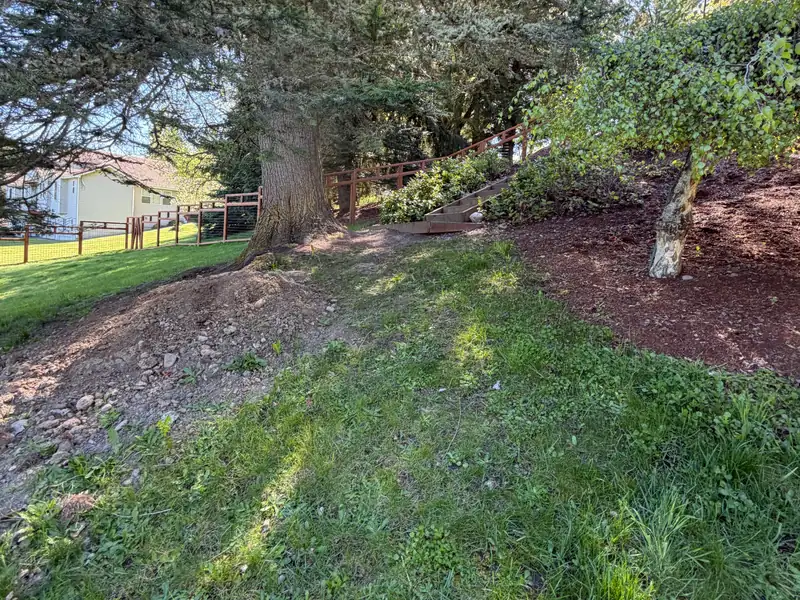
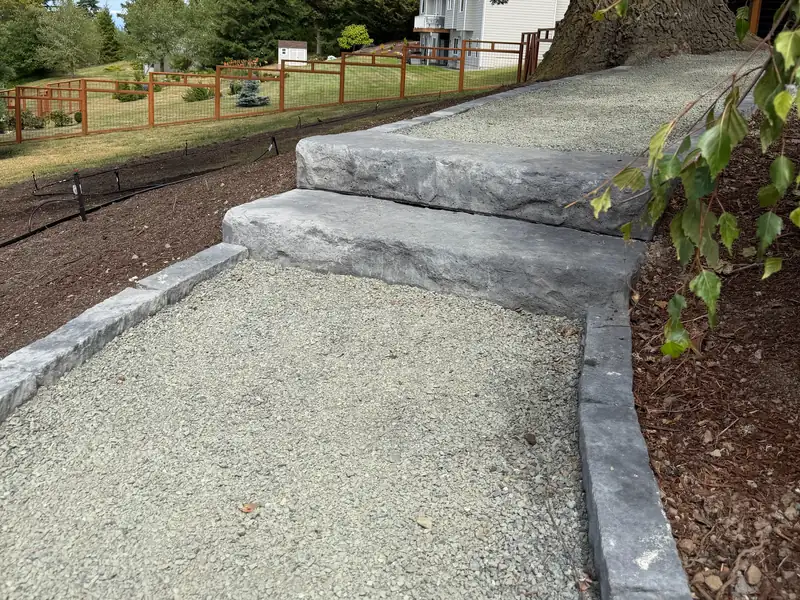
A long set of wooden steps came down from the upper yard. We replaced every one with large cast stone steps, tied them into crushed rock paths, and added a few more below a second stair set the owners kept, so both routes curve together. Path lights now mark the way down. Read the Bell Hill story.
Port Angeles: steps to Ruth's mailbox
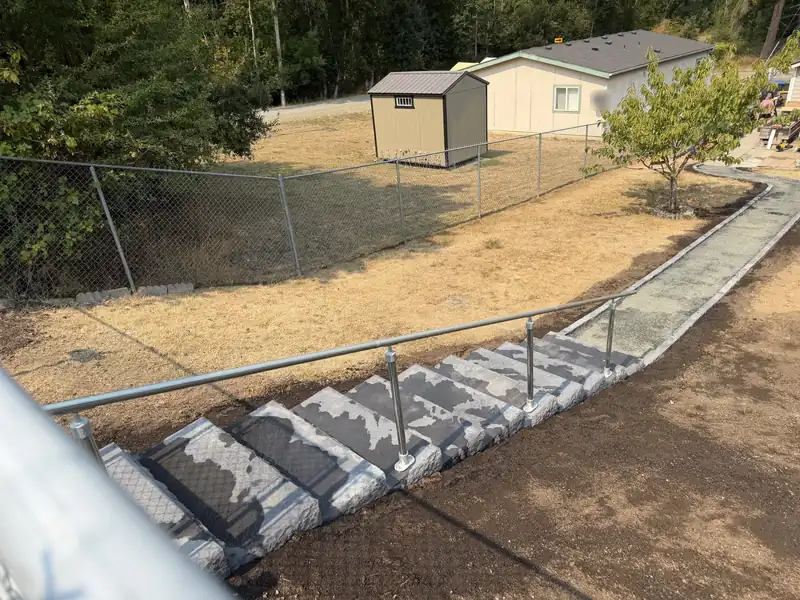
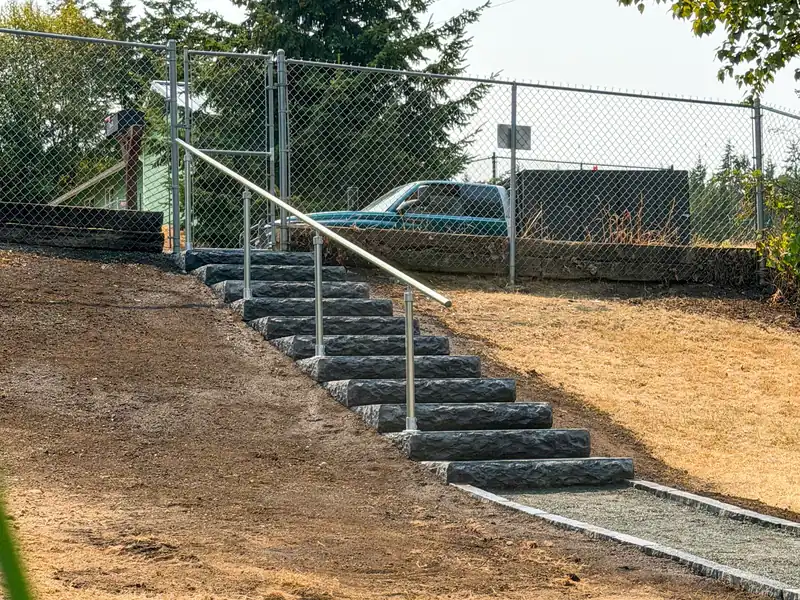
Ruth's mailbox sits at the top of a steep slope that turns slick every winter. We set precast steps with a natural stone look up the hill, connected them to a path back to the house, and added a metal handrail that matches her fence. Read Ruth's story.
Port Angeles: lit steps for Kristen's new build
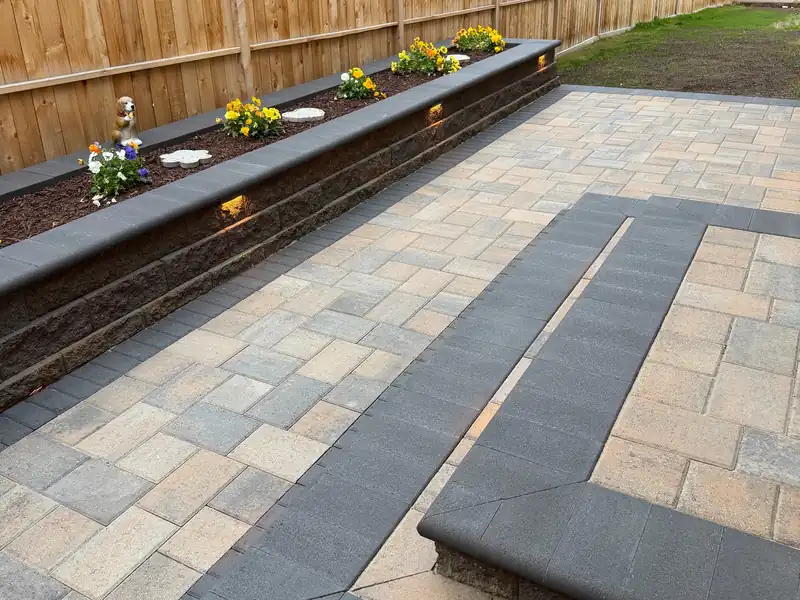
The builder left a big drop from Kristen's back door onto a tiny pad. We built two-tier paver steps down to a landing and a patio, with every rise matched to the door, and set lights under the step edges. Read Kristen's story.
Handrails and lights
A handrail makes a long or steep run easier, especially for anyone who's less steady on their feet. On Ruth's job, the rail matches her existing fence. Low step and path lights help after dark, and they're far easier to wire while the steps are going in. See landscape lighting for how we plan them.
Steps with a walk, wall or patio
Steps often come with a walkway, a retaining wall or a patio, and we plan them together so the heights line up.
Step questions
How many steps does my slope need?
It depends on the total drop and how far the run goes. We measure both at the visit and lay the steps out so every rise is the same.
Can you replace old wooden steps?
Yes. On Bell Hill we took out a full set of wooden steps and put in cast stone. Stone doesn't rot, and each step sits on its own base.
Do steps need a handrail?
Long or steep runs are safer with one, and we'll recommend it when we think it's needed. We can include a rail in the project.
Can you add steps to stairs I already have?
Often, yes. On Bell Hill we added cast stone steps to the bottom of an existing stair set so it joined the new path in one curve.
Will the steps get slippery?
Cast stone and pavers have a textured surface, and we pitch each tread so water runs off rather than sitting on it. Moss can grow on any shaded step, so a shady run needs a sweep now and then.