Planting and landscape renovations
New lawns and sod
Sod laid on fresh topsoil and a proper grade, as a job on its own or as the last step of a bigger project. We recommend sod over seed, and here is why.
Last in, for a reason
On most of our projects the lawn is the final step. Grading, drainage, walls, patios and planting beds all go in first, so nothing gets driven over or dug up after the lawn is down. It also means the lawn edges meet finished beds and pavers cleanly.
A lawn on its own is fine too
You don't need a bigger project to call us. We take lawn-only installs: an old lawn that's past saving, a bare yard on a new build, or a patch of weeds you want turned into grass. The prep is the same either way.
A new build in Sequim
Behind one new Sequim house there was nothing but dirt and rock. We added a few inches of topsoil, graded it so water drains away, and laid sod. Read the Sequim new-build lawn story.
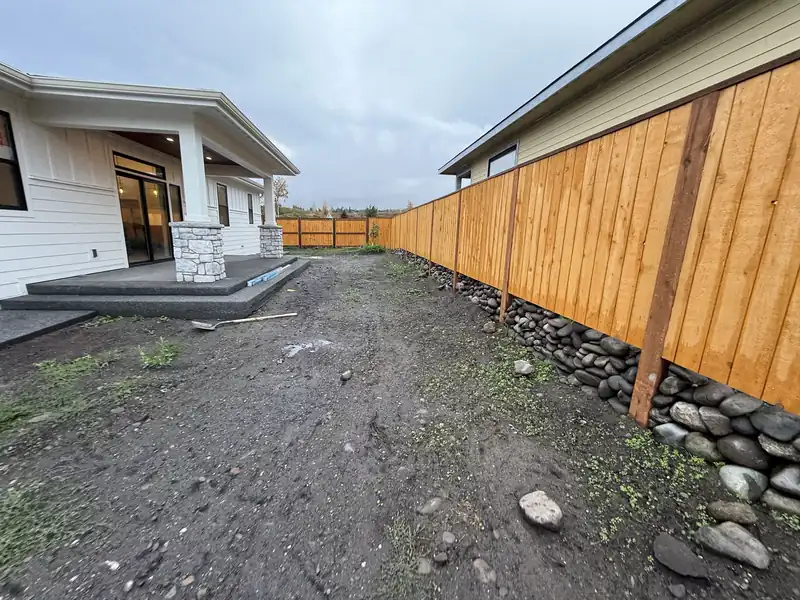
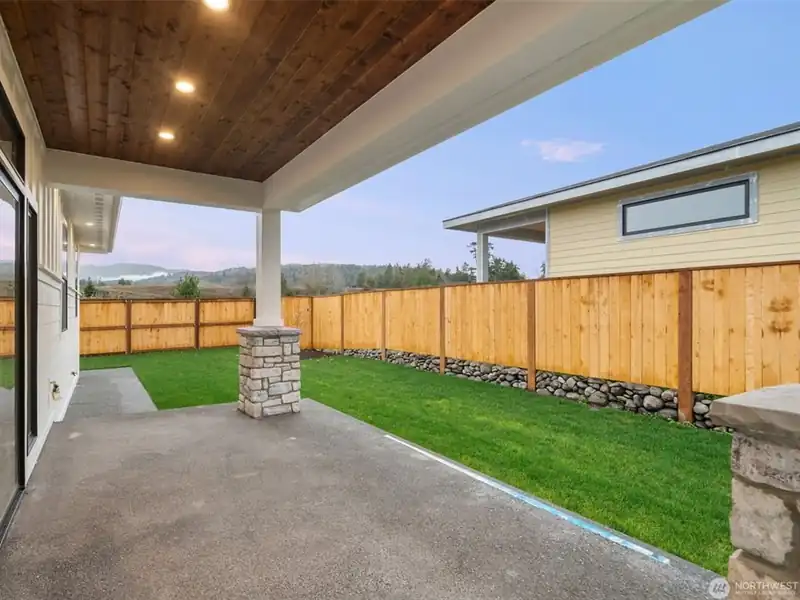
The ground matters most
A lawn is only as good as what's under it. We grade so water runs away from the house, loosen compacted ground and bring in topsoil where the native soil is poor. On glacial till that prep makes the difference between a lawn that roots deep and one that browns by July.
How much lawn?
In the Sequim valley especially, it pays to be honest about how much lawn you'll use. Where water is limited by the Dungeness water rule, a smaller lawn surrounded by planted beds is easier to keep green. In wetter Port Angeles, a lawn has an easier time, but shade and drainage still decide where it grows well.
Why sod over seed
We recommend sod on almost every lawn we put in. It arrives already grown, so it holds the soil from day one, and you can see right away whether it's healthy. Seed can work, but only with close to perfect watering for weeks, and in a dry Sequim summer that's a lot to ask. For the size of most yards here, the difference in cost is small next to the chance of a seeded lawn failing.
Edges that stay put
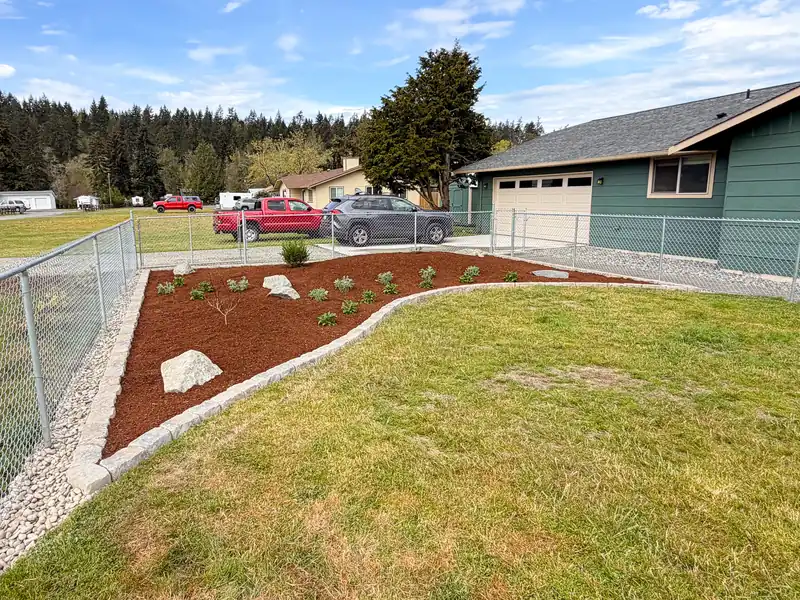
A block or paver edge between the lawn and the beds keeps grass out of the planting and gives the yard a finished line.
Where new lawns come in
Most of the sod we lay goes down on new construction lots or alongside a planting project.
Lawn questions
Do you take lawn-only jobs?
Yes. A new lawn on its own is a job we're happy to take, and it gets the same grading and soil prep as a lawn inside a bigger project.
Sod or seed?
We recommend sod. For the size of most yards here the extra cost over seed is small, and sod is already established when it goes down, so it survives far better and you can tell straight away whether it's healthy. Give it plenty of water for the first few weeks and it grows in quickly. Seed only comes in with close to perfect watering, and when that slips, it fails.
When can we walk on new sod?
Light foot traffic is fine once it has rooted in, usually after the first few weeks of steady watering. We'll tell you what to watch for.
Can you put a lawn on a slope?
Gentle slopes, yes. Steep banks are usually better as planted beds or terraced with a retaining wall, since a steep lawn is hard to care for and water runs off before it soaks in.
Is a lawn a lot of upkeep?
Less than you might think. A lawn on good soil and a proper grade can be easier to care for than a yard packed with shrubs and beds.